 Colchester Electrical Services
Guide
How to choose a company for an EICR
Choosing an EICR company: check registration, qualifications and insurance, ask what the report covers, and get a written quote that explains how the price is built.
- Send a short enquiry
- Covering Essex
- EICR and related services
Choose an EICR company that can show it is registered with a recognised electrical scheme, that uses a properly qualified electrician for inspection and testing, and that gives you a written quote and a clear written report. Not every electrician is set up for this kind of work, so a few questions before you book will save time and disputes later. This guide covers what to ask and what to look out for if you are in Colchester or elsewhere in Essex.
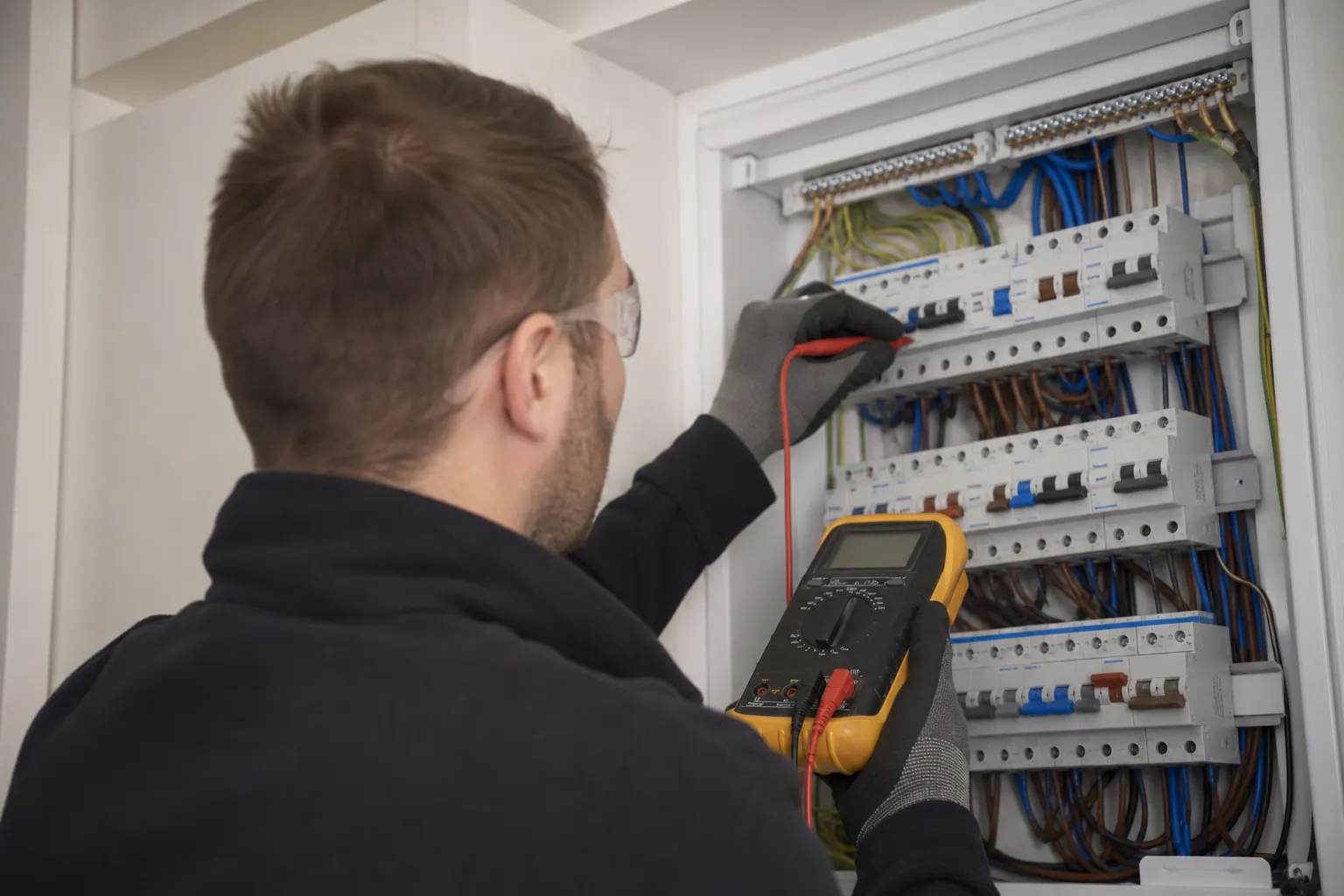
Can any qualified electrician do an EICR?
Not necessarily. An electrical installation condition report is a formal inspection, and it needs someone with experience in inspection and testing, not just installation work. They also need calibrated test instruments and the knowledge to judge what they find against current standards.
Ask the company who will actually carry out the inspection and what inspection and testing qualification that person holds. A good firm will answer plainly. You can also ask whether they are registered with a recognised scheme such as NICEIC or NAPIT, and ask to see proof. Registration details can usually be checked on the scheme's own website, which is better than relying on a logo.
Ask what the report will actually cover
An installation condition report looks at the fixed electrical system: the consumer unit, wiring, sockets, switches, lighting circuits and earthing and bonding. It does not normally cover your appliances, which is a separate matter.
Before booking, ask whether the inspection covers the whole property, including outbuildings, garages or shared areas if relevant. Ask how the findings are coded and whether you will get a clear summary of anything urgent. A useful report tells you what needs attention and how serious each item is, rather than leaving you to decode it.
Also ask whether they will quote for remedial works if the report finds faults. Having the same company fix problems is convenient, but you are free to get a second quote for the repairs.
How EICR pricing works
There is no single going rate, and be wary of anyone quoting one without knowing your property. The cost is built from a few things: the size of the installation, the number of circuits, how many rooms and outbuildings there are, and how long the testing will take.
Other factors move the price too. Difficult access, such as furniture in the way, locked areas or a consumer unit that is hard to reach, adds time. Some companies charge a fixed price for the inspection, while others work from a callout fee plus an hourly rate. Evening or weekend visits may be priced differently from weekday ones. Any repairs, parts or further investigation after the report are normally separate from the inspection itself.
The simplest approach is to ask for a written quote that says exactly what is included, what is not, and how any extra work would be charged. Compare quotes on that basis rather than on the headline figure alone.
Questions to ask when choosing online or nearby
Searching online will give you plenty of options, so use a short checklist to narrow them down:
Does the company say which areas it covers, and does that include your address? Will you receive a written quote before any work starts? Can they confirm they carry public liability insurance? Will you get the report in writing, and how soon after the visit? Will they explain the findings if you have questions?
Be cautious of vague answers, pressure to commit on the spot, or a price that seems unrelated to the size of your property. Reviews can help, but a company that is open about its process is usually a better sign than a long list of promises.
Who needs one, and how it differs from an EIC
In rented homes, the landlord is generally responsible for arranging the EICR, not the tenant. Tenants should expect to give reasonable access. Landlords of private rented properties are generally expected to have the electrical installation inspected at regular intervals, often every five years or sooner if the report advises. Rules can change and differ between parts of the UK, so check GOV.UK for the current position. Employers and business owners also have duties under the Electricity at Work Regulations, which is one reason periodic inspection is common in commercial premises.
An Electrical Installation Certificate (EIC) is different. It is issued when new electrical work is installed or an existing circuit is altered, and it confirms that the work was designed, built and tested properly at that time. An EICR reports on the condition of an installation that has already been in use. So an EIC does not replace the need for an EICR later on; it simply shows the state of the work when it was completed.
Common questions
Can you do your own EICR?
In practice, no. An EICR needs a competent person with the right training, calibrated test equipment and the knowledge to interpret the results. A homeowner can check things like visible damage, but that is not a formal report.
Who is responsible for an EICR, the landlord or the tenant?
For a rented property, the landlord is generally responsible for arranging the inspection and any remedial works. The tenant's part is usually to allow reasonable access. Check GOV.UK for the current rules that apply to your situation.
Do I need an EICR if I have an installation certificate?
An installation certificate (EIC) covers new work or alterations at the time they were done. An EICR checks the condition of the installation over time, so you may still need one later, particularly for rented or commercial property.
Is an EIC the same as an EICR?
No. An EIC confirms that new or altered electrical work was done and tested correctly. An EICR is a report on the condition of an existing installation, with observations on any faults or concerns.
Useful sources
- NICEIC: The electrical contracting body, with a register to check an electrician.
- Citizens Advice: Free, independent advice on your rights when paying for work.