 Colchester Electrical Services
Guide
What is an EICR?
An EICR is a formal report on the condition of a property's fixed electrical wiring. Here is what it covers, who needs one and what the results mean.
- Send a short enquiry
- Covering Essex
- EICR and related services
An EICR, short for Electrical Installation Condition Report, is a formal inspection and written report on the condition of the fixed electrical wiring and equipment in a property. It records whether the electrical installation is safe to keep using and lists any damage, wear or faults found against current standards. Colchester Electrical Services covers EICR work across Colchester and the wider Essex area.
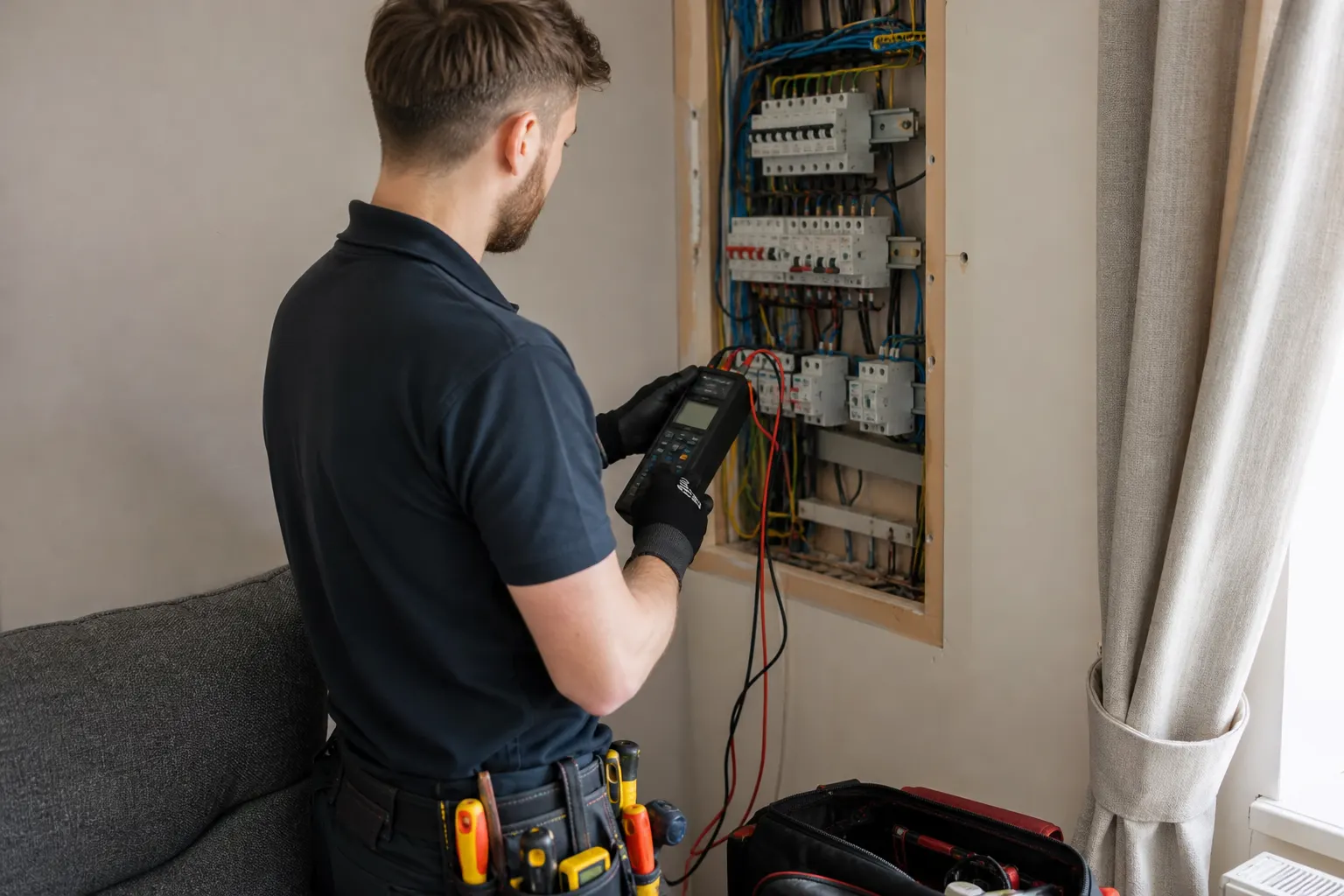
What an EICR actually checks
An EICR looks at the fixed parts of your electrical installation, the parts built into the property rather than things you plug in. That usually means the consumer unit (fuse box), circuit wiring, sockets, light fittings, switches, earthing and bonding.
The electrician inspects visually and carries out tests on the circuits. They are looking for damaged or overheating wiring, overloaded circuits, missing or poor earthing, and signs of unsafe DIY work. The report then compares what they find with the wiring standards used in the UK.
It is a check of condition, not an upgrade. An EICR does not fix problems by itself. It tells you what is there and what, if anything, needs attention.
Who needs an EICR
Landlords are the group most often asked for one. For privately rented homes in England, landlords are legally required to have the electrical installation inspected and tested at regular intervals by a qualified person, and to give tenants a copy of the report. Rules differ between parts of the UK and can change, so check GOV.UK for the current position.
Homeowners are not usually required by law to have one, but it is a sensible check if you have just bought an older property, have not seen any electrical paperwork, or notice warning signs such as flickering lights, warm sockets, tripping circuits or a burning smell.
If you are selling, there is generally no rule that stops a sale without an EICR. Buyers, solicitors or mortgage lenders may still ask for one, and having a recent report can avoid delays.
What happens during the inspection
The electrician will need access to the consumer unit and to every room with electrical fittings, including lofts, garages and outbuildings that are wired. Power will need to be switched off for periods while circuits are tested, so plan around that. Tell them beforehand about anything sensitive, such as computers, medical equipment or freezers.
How long it takes depends mainly on the size of the property and the number of circuits. A small flat is quicker than a large house with outbuildings. Poor access, cluttered rooms or older wiring that is hard to trace can add time. The report is written up after the testing is finished.
Understanding the results
The report gives an overall result of satisfactory or unsatisfactory. Each issue found is given a code:
C1: danger present, risk of injury. Immediate action is needed.
C2: potentially dangerous. Urgent remedial work is needed.
C3: improvement recommended. This does not make the report unsatisfactory on its own.
FI: further investigation required without delay.
A report with any C1, C2 or FI item is unsatisfactory. If you are a landlord, the repairs need to be done within the timescale set by the current rules, and the report will usually say how soon. For a homeowner, the sensible approach is to treat C1 and C2 items as work to arrange as soon as possible. After the work, ask for written confirmation that the issues have been put right.
What affects the cost of an EICR
Pricing for an EICR is set by the amount of work involved, not a single fixed rate for every property. The main things that move the cost are the number of circuits and rooms, the size of the property, how easy it is to reach the wiring and consumer unit, and the age and condition of the installation. Some electricians quote a fixed price for the inspection, others charge by time, and some add a callout fee. Ask which applies.
Any repair work is separate from the inspection. Parts, extra labour and the time of day the work is carried out can all change a quote for fixes found by the report.
Because every property is different, ask for a written quote that states exactly what is included, and whether remedial work is priced separately.
Common questions
What is an EICR certificate?
People often use the term for the report itself. Strictly, an EICR is a report rather than a pass certificate. It states the condition of the installation, lists any observations with codes, and gives an overall result of satisfactory or unsatisfactory.
Who needs an EICR?
Landlords of privately rented homes in England are legally required to have one at regular intervals. Homeowners, buyers and sellers may want one for peace of mind or because a buyer or lender asks. Rules can change, so check GOV.UK.
How often should an EICR be done?
For rented homes the interval is commonly up to five years, or sooner if the previous report recommends it. For owner-occupied homes, the report itself will suggest when the next inspection is due, based on the condition of the installation.
How long does an EICR test take?
It depends on the size of the property, the number of circuits and how easy the wiring is to access. A small flat is normally quicker than a large house. Ask your electrician for an estimate once they know the details of your property.
Useful sources
- NICEIC: The electrical contracting body, with a register to check an electrician.
- GOV.UK: electrical safety standards in the private rented sector: The official guidance for landlords, tenants and councils on electrical safety checks.