 Colchester Electrical Services
Guide
How to get an EICR
To get an EICR, book a competent electrician to inspect and test your installation and issue a condition report. Here are the steps, and what affects cost.
- Send a short enquiry
- Covering Essex
- EICR and related services
To get an EICR, you book a competent electrician to carry out inspection and testing of your electrical installation, and they then issue an electrical installation condition report. Colchester Electrical Services provides EICRs for homes and rented properties in Colchester and across Essex. The steps below cover what to arrange, what to expect and what happens afterwards.
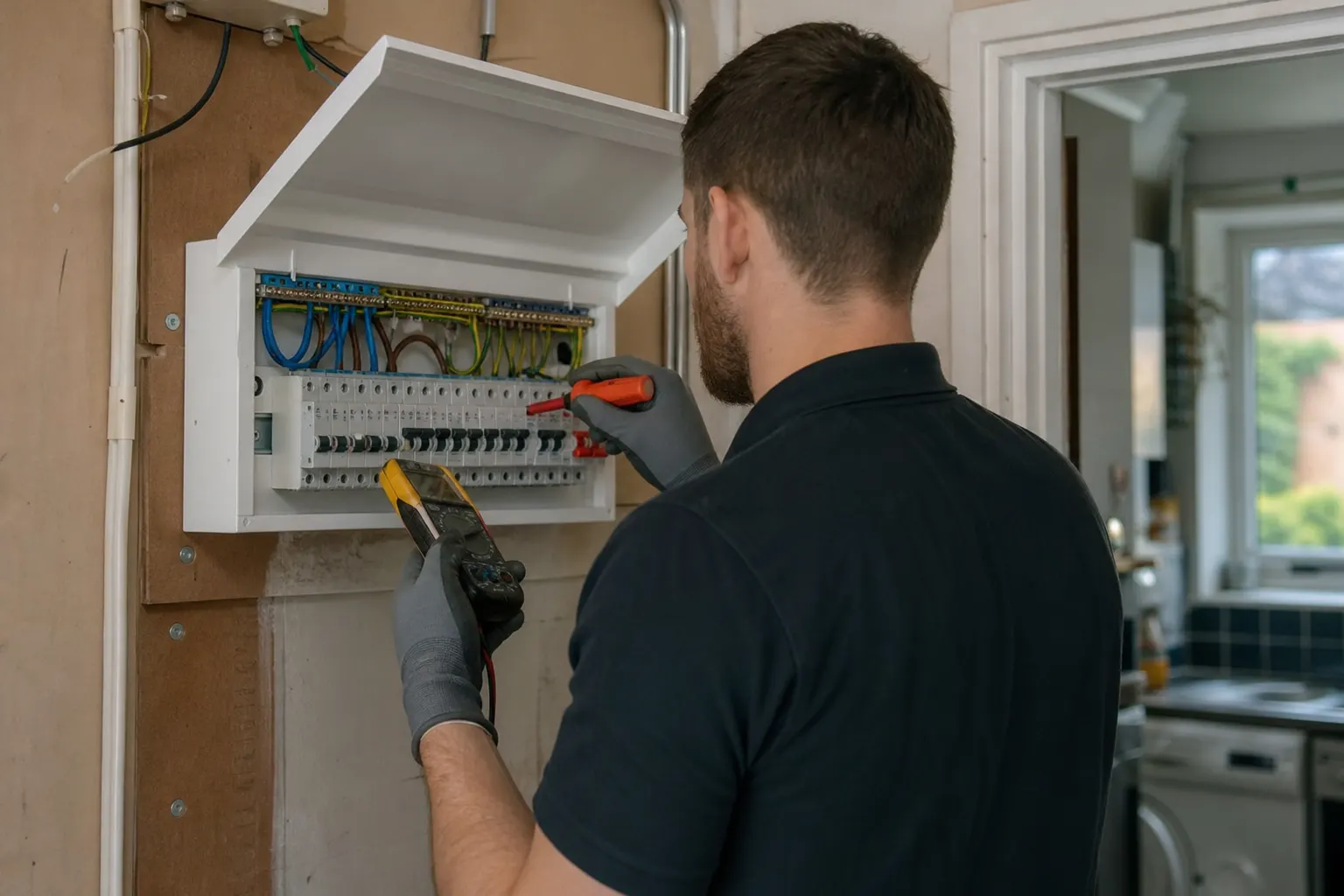
What an EICR check actually is
EICR stands for electrical installation condition report. It is a formal record of the condition of the fixed electrical installation in a property: the consumer unit (fuse board), wiring, sockets, light fittings and earthing and bonding. It is not a quick visual look. The electrician inspects the installation and runs tests to find out whether it is safe to keep using.
The report does not usually cover your appliances, such as a kettle or washing machine. Those fall under separate portable appliance checks. An EICR is about the permanent wiring and the equipment connected to it.
The steps to get one
First, decide why you need it. Common reasons are renting out a property, buying or selling, a safety concern, or simply not knowing the age or condition of the wiring. Knowing the reason helps the electrician plan the visit.
Second, gather basic details: the type of property, roughly how many circuits or rooms there are, whether there is a garage, outbuilding or garden supply, and any known problems such as tripping or warm sockets. Older paperwork, including a previous condition report, is useful if you have it.
Third, request the inspection. Many people now arrange this online by sending these details through a firm's enquiry form. The inspection itself always has to happen in person, because the testing is done on site. Finally, agree a date and make sure the electrician can reach the consumer unit and every room.
Who can carry it out, and why you cannot do your own
Not every electrician is the right person for an EICR. The work needs specific knowledge of inspection and testing, current wiring regulations, test equipment and how to code faults. Ask whether the electrician regularly carries out condition reports, and ask to see proof of their competence, such as membership of a recognised competent person scheme.
You cannot sensibly do your own. Even if you are handy, the report needs calibrated test instruments and the training to interpret results. A landlord or buyer is unlikely to accept a report from someone without the right qualifications. Testing also involves isolating circuits, which carries real risk if you are not trained.
What happens on the day and what the report says
The electrician will usually switch the power off at times, so plan around computers, heating and anything that needs constant power. They inspect the consumer unit, open up some accessories and test the circuits. The time needed depends on the size and age of the installation.
The report lists any observations using standard codes. C1 means danger is present and immediate action is needed. C2 means potentially dangerous. C3 means improvement is recommended. FI means further investigation is required. The overall result is satisfactory or unsatisfactory. An unsatisfactory result usually means there is at least one C1, C2 or FI item.
If remedial work is needed, you can ask the electrician for a written quote for the repairs. Once the faults are fixed, the installation can be reassessed and the paperwork updated. Keep the report safe, as landlords, buyers and letting agents often ask to see it.
What affects the cost
An EICR is normally priced as a fixed fee for the inspection, though some electricians work on an hourly rate or add a callout charge. What moves the price is mainly the size of the property and the number of circuits, how easy it is to reach the consumer unit and accessories, the age and condition of the wiring, and whether there are outbuildings or extra supplies. A longer job costs more than a short one.
Repairs are separate. Any remedial work is priced for parts and time, and the time of day or day of the week can also matter. Ask for a written quote that states what is included, and check whether remedial work and re-testing are covered or charged separately.
Landlords and how often you need one
Rules for rented property are set by government and can change, so check GOV.UK for the current position in your part of the UK. In general, landlords must make sure the electrical installation is inspected and tested at regular intervals by a qualified person, and must keep the report and give copies to tenants. Five years is a common maximum gap for rented homes, but the report itself will state when the next inspection is due.
For your own home there is usually no set legal timetable, but regular checks are sensible, especially if you have just moved in or the wiring is old.
Common questions
Can a landlord be fined for no EICR?
Yes, councils can take enforcement action against landlords who do not meet their electrical safety duties, and penalties can apply. The exact rules depend on where the property is and can change, so check GOV.UK for the current position.
Can any electrician do an EICR?
Not every electrician is suited to it. Choose someone who regularly carries out inspection and testing, uses calibrated test equipment and can show proof of competence, such as membership of a recognised scheme.
How to get an EICR online?
You can request one online by sending your property details and preferred dates through an electrician's enquiry form. The inspection itself must still be done in person, and the report is issued afterwards.
How much does an EICR cost?
It depends on the size of the property, number of circuits, access, the condition of the wiring and how long the job takes. Ask for a written quote that explains what is included, and whether any remedial work is charged separately.
Useful sources
- NICEIC: The electrical contracting body, with a register to check an electrician.
- GOV.UK: electrical safety standards in the private rented sector: The official guidance for landlords, tenants and councils on electrical safety checks.